Futures Researcher and Designer
National Oceanography Centre
5 days | United Kingdom
This sprint was in collaboration with National Oceanography Centre, UK and the Royal College of Art.
As interest in the Arctic grows, the focus is shifting from extraction to exploring what we don’t yet know, including what lies beneath the ice. NOC’s ambitions include sending autonomous vehicles under Arctic ice to answer fundamental questions about biogeochemistry, ecosystems, and climate. Yet Arctic science also raises critical questions: Who owns the knowledge produced? How do we ensure it is open, useful, and shared, especially with communities living closest to the change?
Approach
Horizon Scanning
Identifying key drivers shaping Arctic ocean research, including funding models, geopolitical interest, environmental change, and community involvement through secondary research and expert consultations.
Scenarios Development
Mapping four distinct futures based on two critical uncertainties: global research funding levels and the degree of local community participation.
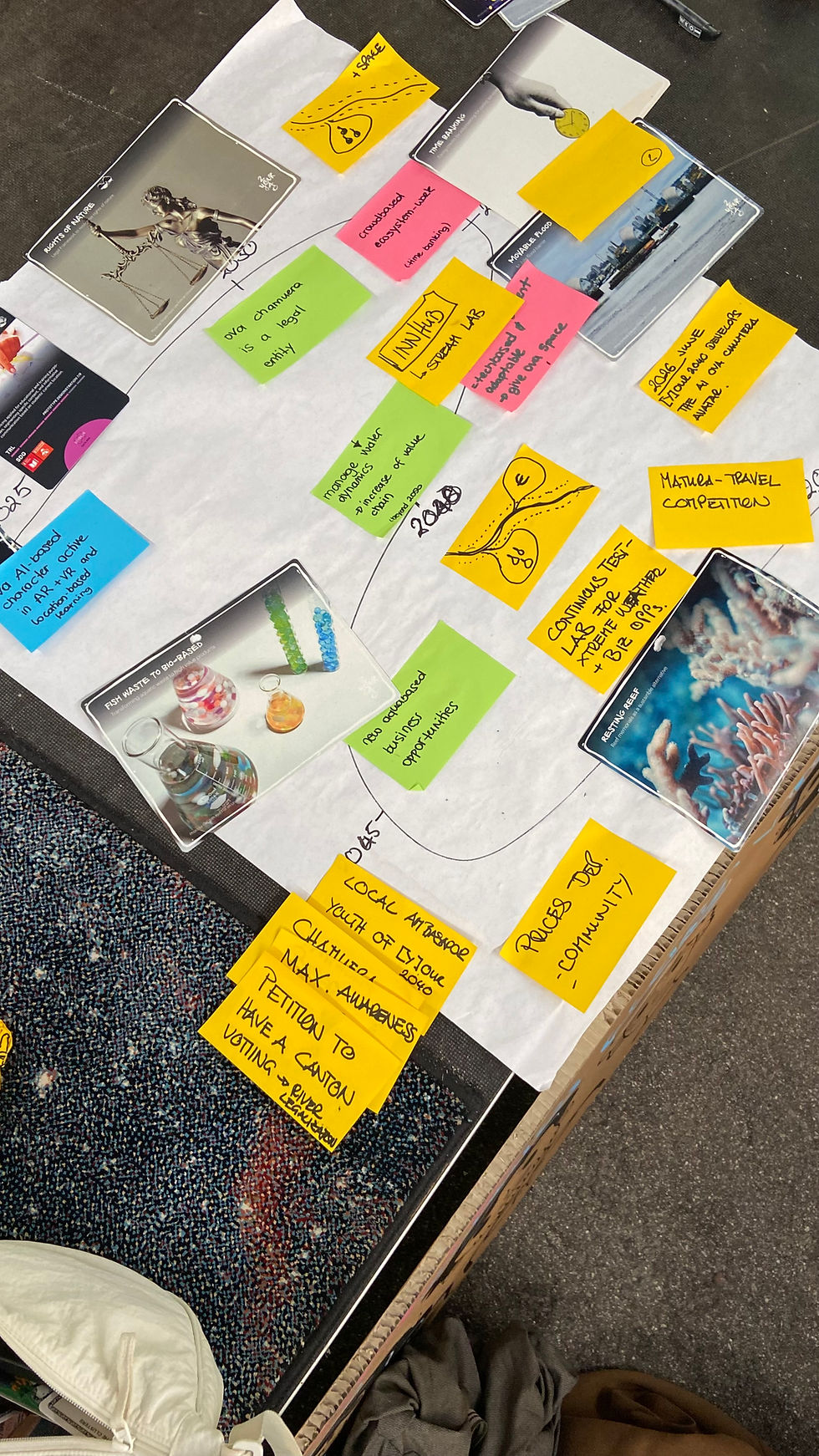
Preferred future & backcasting
Selecting a desirable future and working backward to identify strategic actions, capabilities, and roles needed today.
Designing Artefacts
Designing future roles and tools to make abstract futures tangible and discussable.


Signal Scout
An Arctic observer who blends Indigenous seasonal knowledge with scientific data using perception-enhancing tools.

Whale Whisperer
A bridge between humans and animals, translating migration and communication into climate insight through non-invasive tech.

Cultural Tech Weaver
A co-designer who weaves Indigenous knowledge into digital tools while protecting data sovereignty.

Response Rhythmist
A community responder who coordinates emergencies through rhythm, oral knowledge, and embodied sensing.
Impact
This project provided NOC scientists a space to go beyond their usual day to day.